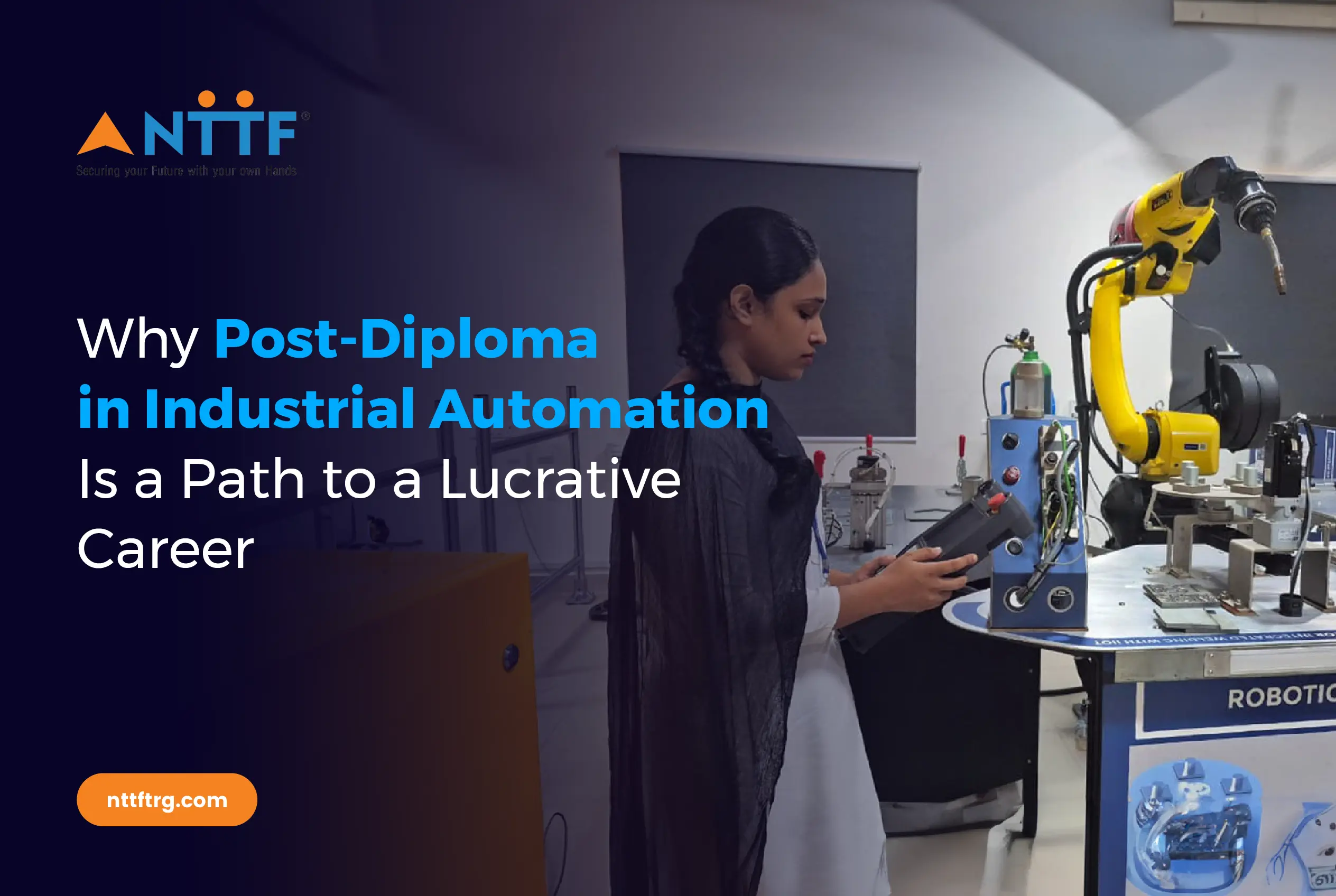
If you’ve already completed a diploma in engineering and are now looking to take your career to the next level, consider the incredible opportunities that lie in industrial automation. As industries continue to adopt advanced technologies, automation is leading the charge in transforming how factories operate—from seamless machine communication to real-time system corrections and 24/7 production efficiency. This isn’t just the future; it’s happening now. By pursuing a Industrial Automation course, you can position yourself at the forefront of this dynamic industry, gaining skills that will open doors to a high-paying, impactful career.
Understanding Industrial Automation
Industrial automation refers to the integration of control systems such as computers, robots, and information technologies into industrial processes, machinery, and systems, with minimal or no human intervention. The primary objectives are to enhance production speed, precision, and safety while reducing costs and human errors. Automation is prevalent across a wide array of industries including manufacturing, automotive, electronics, food processing, pharmaceuticals, and more, making it a cornerstone of modern industry.
The Evolution of Automation: From Manual Labor to Smart Factories
The journey of industrial automation began with the mechanization of basic tasks, evolving into programmable logic controllers (PLCs) that could handle more complex processes. Today, we have entered the era of smart factories, where machines are interconnected via the Internet of Things (IoT), capable of analyzing data, predicting issues, and making decisions in real time. This evolution has not only increased production efficiency but has also fundamentally changed the skill sets required in the workforce.
In a smart factory, machines are equipped with sensors that monitor performance, identify anomalies, and communicate with other devices to adjust operations. This connectivity and intelligence are what make industrial automation so powerful, and they require a new generation of professionals who are skilled in designing, maintaining, and optimizing these systems.
How a Post-Diploma in Industrial Automation Can Boost Your Career Prospects
A Post-Diploma in Industrial Automation provides specialized training that combines technical expertise with practical skills. This makes graduates well-equipped to handle the challenges of modern industry. But why is this advanced diploma in mechatronics particularly advantageous in the current job market?
- Bridging the Skills Gap As companies around the world adopt Industry 4.0 technologies, there is a growing need for professionals who understand automation systems, PLC programming, robotics, and process control. A Post-Diploma in Industrial Automation helps bridge the skills gap, providing the industry with experts who can ensure seamless operation of automated systems.
- Hands-On Learning Unlike many traditional courses, a Post-Diploma in Industrial Automation focuses on hands-on training, helping students learn real-world applications of automation technologies. This practical exposure ensures that graduates are job-ready and can quickly adapt to the demands of various industries. From configuring robots to designing automated workflows, hands-on training is key to mastering this field.
- High Earning Potential Automation professionals are critical assets in modern industries. With industrial automation transforming various sectors, companies are willing to offer competitive salaries to professionals who can ensure seamless operation of their automated systems. Roles like Automation Engineer, Control Systems Engineer, PLC Programmer, and Robotics Technician are well-paid positions that come with additional benefits and opportunities for growth.
- Opportunities Across Diverse Industries Automation is not confined to a single sector. From manufacturing to food processing, pharmaceuticals to automotive, and electronics to oil and gas, almost every industry today relies on automation. This diversity provides a wide range of career opportunities for those with expertise in industrial automation. Professionals can choose to work in an industry that aligns with their interests, whether that’s automotive robotics, automated packaging, or chemical processing.
- A Pathway to Future-Proof Careers The rise of smart factories, AI, and IoT-based industrial systems means that automation is here to stay. By pursuing a Post-Diploma in Industrial Automation, you are positioning yourself in a field that promises long-term career growth and stability. As industries become more dependent on automated solutions, the demand for skilled professionals is set to increase.
NTTF’s Post Diploma in Industrial Automation: Your Gateway to a Thriving Career
For those eager to dive into this cutting-edge field, the plc scada training offered by NTTF (Nettur Technical Training Foundation) is an excellent choice. Designed to provide a thorough understanding of automation technologies, this program equips students with both theoretical knowledge and practical skills. Here’s what sets this advanced diploma in mechatronics apart:
Key Highlights of NTTF’s Post Diploma in Industrial Automation
- Comprehensive Curriculum: NTTF’s course covers all essential aspects of industrial automation, including PLC programming, SCADA systems, industrial robotics, process control, and more. The curriculum is carefully crafted to ensure that students are well-prepared for the challenges of the industry.
- Hands-On Training with Industry Tools: The program emphasizes practical learning, ensuring that students are job-ready from day one. From simulating automation processes to working on live projects, students gain extensive hands-on experience.
- Exposure to Emerging Technologies: The course goes beyond traditional automation training, offering insights into cutting-edge technologies like AI-driven automation, IoT-enabled smart devices, and machine learning for predictive maintenance. By understanding these technologies, students can prepare for the future of automation.
- Industry Projects: One of the unique features of the program is the opportunity to work on real-world projects with industry partners, gaining practical exposure and developing problem-solving skills. Whether it’s designing a robotic system or configuring a SCADA network, these projects provide invaluable experience.
- Career Support and Placement Assistance: NTTF’s strong industry connections mean excellent placement support. The program offers networking opportunities, internships, and workshops with industry experts, helping students secure promising careers upon graduation.
Diverse Career Paths in Industrial Automation
A Post-Diploma in Industrial automation opens up a multitude of career paths. Here are a few roles you could pursue:
- Automation Engineer: Design and implement automation solutions for manufacturing processes, from robotic systems to automated assembly lines.
- Control Systems Engineer: Focus on developing, testing, and maintaining control systems that regulate machinery in industries.
- PLC Programmer: Write and configure PLC programs to manage the functioning of automated systems, ensuring smooth operations.
- Robotics Technician: Work on the installation, maintenance, and repair of robotic systems used in industrial settings.
- Process Control Engineer: Monitor and improve industrial processes to ensure efficiency and safety in production.
How Industrial Automation Contributes to a Sustainable Future
While industrial automation is primarily about efficiency and productivity, it also plays a vital role in sustainability. Automated systems minimize waste, reduce energy consumption, and ensure that resources are used efficiently. For instance, automated monitoring systems can detect leaks or malfunctions early, reducing wastage of raw materials. Smart sensors can adjust machinery to operate at optimal energy levels, significantly lowering carbon footprints. As industries worldwide look to adopt greener practices, professionals who can design, maintain, and optimize these systems are becoming essential.
Who Should Enroll in NTTF’s PG Diploma in Industrial Automation?
- Engineering Graduates: If you have a background in electronics, electrical, mechanical, or a related field, this course will give you the specialized skills needed to excel in automation.
- Diploma Holders: Those with a diploma in technical fields who want to enhance their career prospects and expertise.
- Working Professionals: Current employees in industrial sectors who wish to upgrade their skills and advance their careers in automation technology.
- Tech Enthusiasts: If you’re fascinated by the idea of smart factories, robotics, and intelligent systems, this course is your gateway to a fulfilling career.
The Future of Industrial Automation: Why It’s a Smart Career Choice
The world is moving toward more intelligent and interconnected systems, and industrial plc programming is at the core of this transformation. As we step further into the era of Industry 4.0, where data drives decision-making and machines become more autonomous, the skills required to manage, design, and optimize these systems will be more in demand than ever.
Automation is not just about replacing manual labor; it’s about enhancing capabilities, improving quality, and creating new possibilities. Whether it’s a car that self-assembles or a production line that self-regulates, automation professionals are the creators behind these marvels. With smart factories, AI-driven manufacturing, and IoT integration becoming standard, there’s never been a better time to pursue a career in this field.
Conclusion: Step into the Future with NTTF’s PG Diploma in Industrial Automation
Industrial automation is more than a career; it’s a revolution. It’s about making the impossible possible, creating solutions that improve lives, industries, and economies. If you’re ready to be a part of this future, consider enrolling in NTTF’s PG Diploma in Industrial Automation. It’s a program designed not just to teach but to inspire, innovate, and equip you with the skills needed to lead in this dynamic field.