What defines a future-ready manufacturing engineer today, traditional production knowledge or the ability to work with digitally driven systems? Manufacturing is shifting toward connected and data-driven environments. This change is creating demand for engineers who understand both tooling and digital systems. A Diploma in Tool Engineering and Digital Manufacturing bridges this gap and prepares engineers for modern industrial roles.
Read this guide to understand digital manufacturing and choose the right course for a strong future in modern manufacturing.
Quick Answer: Digital Manufacturing Course India
- Digital manufacturing combines tool engineering with automation and data-driven systems
- A tool engineering diploma builds strong fundamentals in tooling and production design
- Digital manufacturing courses in India prepare engineers for automation-focused roles
- Career opportunities include manufacturing automation jobs and tool engineering roles
What is Digital Manufacturing?
Digital manufacturing is the application of software systems and data-driven tools to design manufacturing processes and control manufacturing processes. It establishes an interconnected environment through which design and quality functions interact with common data. This integration enables engineers to move from concept to production with enhanced control over each phase. Design models are no longer standalone files. They are integrated into a larger system that directs machining and inspection with greater accuracy. For a deeper walkthrough of the three pillars behind this shift (the digital product lifecycle, smart factories, and connected value chains), see What Are the 3 Major Aspects of Digital Manufacturing?
Why Should You Study Digital Manufacturing?
Here are the key reasons why you should study digital manufacturing:
- Industry Shift Toward Automation
Industrial production now depends more on automated systems and software-led process control than on manual coordination alone. Factories use digital platforms to track machine performance and production flow with greater accuracy, which raises the value of engineers who understand digital manufacturing.
A strong base in this field helps engineers connect design decisions with actual shop floor output, so they can work more effectively in automated production environments. This shift also strengthens the relevance of a digital manufacturing course in India because employers increasingly prefer candidates who can work with connected systems and production technology in the same workflow.
- Demand for Hybrid Skill Sets
Manufacturing companies now look for engineers who can work across tooling functions and digital systems without losing technical depth. Tool design knowledge remains important because production still depends on precision and process stability. Digital knowledge adds another layer of value because factories rely on software for planning and quality control.
This combination supports roles that demand design understanding along with system-level thinking, which makes engineers more useful in modern industrial teams. A program built around both domains creates stronger job readiness, and that is one reason tool engineering diploma jobs now align closely with digital manufacturing roles.
- Better Career Stability and Growth
Career stability in manufacturing depends on how closely a skill matches long-term industrial demand. Digital manufacturing stands on a stronger base because companies continue to invest in automation and process improvement across sectors such as automotive and electronics.
Generic engineering profiles often face broader competition, but specialized digital manufacturing skills connect more directly with current production needs. This creates clearer career progression in technical roles and improves access to higher-responsibility positions over time. The result is stronger digital manufacturing career scope and better access to manufacturing automation jobs India, especially for engineers who build expertise in both production systems and digital tools.
Diploma in Tool Engineering and Digital Manufacturing (CP01): Course Overview
Program Objective
The program prepares engineers to work at the intersection of tooling and digital production systems. It develops strong design capability and builds system-level understanding that matches current industrial requirements.
Students learn how tooling decisions affect production flow and quality outcomes across connected manufacturing environments. This practical focus gives the course strong relevance for learners exploring a digital manufacturing course India, since industries now prefer engineers who understand both production design and software-led manufacturing systems.
Core Learning Areas
The curriculum covers the technical areas that shape modern manufacturing roles and supports stronger career readiness in tooling and automation-driven industries.
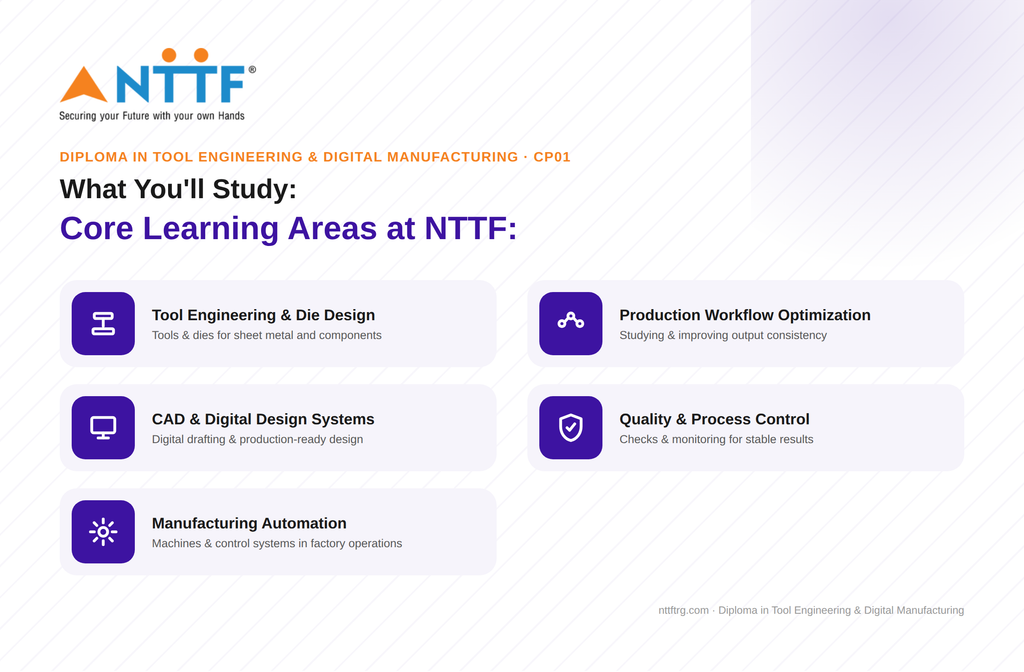
- Tool Engineering and Die Design: Learners study the design of tools and dies used in sheet metal and component manufacturing. This area builds the foundation required for precision tooling work and supports access to tool engineering diploma jobs across core manufacturing sectors.
- CAD and Digital Design Systems: The course develops skill in digital drafting and production-oriented design systems. Students understand how digital models support machining and assembly. They also learn how design data moves across production stages with better accuracy and control.
- Manufacturing Automation Concepts: This area explains how automation supports modern factory operations and production efficiency. Students understand the role of machines and control systems in industrial setups, which strengthens readiness for manufacturing automation jobs India.
- Production Workflow Optimization: The program teaches how production processes are studied and improved for better output consistency. Students connect tooling and digital systems with workflow performance, which adds practical value to their engineering skill set.
- Quality and Process Control: Learners understand how quality checks and process monitoring support stable manufacturing results. This area helps them relate production accuracy with industrial standards, which strengthens long-term digital manufacturing career scope in modern manufacturing environments.
Skills You Will Learn in a Digital Manufacturing Course
- Tool Design Fundamentals: Understanding of tooling systems used in manufacturing
- CAD and Digital Modeling: Ability to create production-ready designs
- Automation Awareness: Knowledge of how automated systems operate in manufacturing
- Process Optimization Skills: Ability to improve production efficiency
- Data-Driven Decision Making: Understanding how data supports production planning
Digital Manufacturing and Tool Engineering Career Scope
Growth of Digital Manufacturing in India
India’s manufacturing sector now places greater emphasis on automation and software-driven production systems, which raises the value of engineers with digital manufacturing and tool engineering knowledge. Factories across major industrial corridors use digital tools to improve design accuracy and production control. They also rely on connected systems to reduce process gaps and maintain output consistency. This shift creates stronger demand for professionals who understand tooling and digital workflows in the same environment. That is why a digital manufacturing course India gains relevance for engineers who want industry-ready skills with direct application in modern manufacturing setups.
Industries Hiring
The demand for digital manufacturing talent spans several major industries, since each sector depends on precision and process control in different ways.
- Automotive Manufacturing: Automotive companies depend on tooling and automated production lines to maintain part accuracy and production efficiency. Engineers with digital manufacturing knowledge support design integration and process control, which makes this sector a major source of manufacturing automation jobs India.
- Electronics Production: Electronics manufacturing requires close control over component dimensions and assembly precision. Digital systems support this requirement through better design coordination and production monitoring, so engineers with these skills remain valuable in this space.
- Aerospace Engineering: Aerospace manufacturing depends on strict engineering standards and high process accuracy. Digital manufacturing knowledge supports this environment because production systems require close alignment between design data and quality control.
- Industrial Machinery: Machinery manufacturers need engineers who understand both tooling systems and production workflows. Digital manufacturing skills strengthen that requirement because modern machinery production depends on design precision and software-supported execution.
Future Outlook
The future outlook for digital manufacturing remains strong because industries continue to invest in smart factories and connected production systems. Companies now prefer engineers who can work across design platforms and production systems with clear technical understanding. This preference improves the digital manufacturing career scope for students and professionals who build expertise in this area. It also strengthens access to tool engineering diploma jobs, since many industrial roles now expect a stronger connection between tooling knowledge and digital process awareness.
Best Digital Manufacturing Course in India: What to Look For
Choosing the right program matters because digital manufacturing demands more than basic engineering theory. A strong course must connect design knowledge with production systems and real industrial practice. This approach helps learners build skills that match current factory requirements and improves access to relevant technical roles.
Selection Criteria
- Industry-Relevant Curriculum: The curriculum must reflect actual manufacturing requirements rather than remain limited to classroom concepts. A strong program covers tooling and digital production systems. It also explains how these areas connect inside modern factories. This kind of structure gives more value to learners looking for a digital manufacturing course India with direct career relevance.
- Practical Training and Projects: Practical exposure matters because digital manufacturing depends on applied engineering judgment. Training should include project work and production-oriented problem solving. It should also help students relate technical concepts to factory conditions. This improves job readiness and gives learners a stronger understanding of how design decisions affect production results.
- Exposure to Digital Tools and Systems: A good course must give students exposure to the digital platforms used in manufacturing environments. This includes design systems and production support tools. It also includes process monitoring concepts that help learners understand how connected manufacturing functions in practice. That exposure becomes important for students aiming for manufacturing automation jobs in India, where software-led production systems already shape daily operations.
- Placement Support: Placement support adds practical value because it connects learning with industry entry. A strong institution does more than teach technical concepts. It also guides students toward relevant job opportunities in tooling and production environments. This support becomes important for learners who want a smoother transition into tool engineering diploma jobs and digital manufacturing roles.
Challenges Without Digital Manufacturing Skills
Engineers who lack digital manufacturing skills often face a clear disadvantage in modern industrial hiring. Manufacturing companies now expect stronger technical alignment with automation and connected production systems, so general engineering knowledge alone often falls short.
- Limited Access to Modern Manufacturing Roles: Many present-day manufacturing roles require familiarity with digital production environments. Candidates without this knowledge may find it harder to enter positions that involve tooling integration and software-supported workflows.
- Reduced Exposure to Automation Systems: Automation already shapes production across major industries, so limited exposure creates a technical gap. Engineers without this background may struggle to adapt to factories where machine coordination and digital process control hold central importance.
- Slower Career Growth in Core Engineering Domains: Career growth in core manufacturing often depends on specialized technical relevance. Engineers who understand digital systems and tooling carry stronger value in production environments, while generic profiles often face slower progression in comparison.
Conclusion
Digital manufacturing now shapes the direction of industrial engineering because factories depend more on connected systems and automation-led production. Engineers who understand both tooling and digital workflows hold stronger relevance in this environment, which improves access to stable and technically meaningful career paths. Students who want to build that capability can explore NTTF’s Diploma in Tool Engineering and Digital Manufacturing (CP01), a program designed to strengthen practical design knowledge and digital manufacturing readiness for core industry roles.