What does a mechatronics engineer actually handle on a typical workday or complete production lines? Modern manufacturing no longer operates through isolated mechanical systems. It relies on integrated environments where electronics and control systems work together. This shift has increased the demand for engineers who understand both hardware and intelligent systems. A diploma in mechatronics smart factory prepares engineers for this exact requirement.
Quick Answer: Diploma in Mechatronics Smart Factory
- Mechatronics combines mechanical systems and control engineering
- A robotics engineer diploma India builds skills in automation and smart factory systems
- Engineers work on machines and production automation
- Career scope includes roles in automation and production systems
What is Mechatronics Engineering?
Mechatronics engineering is a multidisciplinary field that combines mechanical engineering with electronics to build machines that can sense and perform with greater control. It also brings in control systems and software, which allows engineers to create automated systems that operate with logic and precision rather than through mechanical action alone. This combination gives mechatronics a strong role in modern industry because production equipment now depends on coordinated interaction between physical components and electronic control. A machine is no longer defined only by gears and motors. Its performance also depends on sensors and embedded control systems that regulate movement and accuracy.
What Does a Mechatronics Engineer Actually Do Every Day?
A mechatronics engineer works at the point where machines and electronic control systems operate together inside modern production environments. Daily responsibilities connect mechanical performance with automation logic, so the work remains closely tied to output quality and process reliability. This practical scope explains why a diploma in mechatronics smart factory carries strong career relevance in industries that depend on automated manufacturing.
- System Monitoring and Control
A large part of the job centers on monitoring automated systems and tracking machine performance across production cycles. Engineers study machine behavior and output consistency. They also check whether the control system maintains the required operating conditions. This responsibility matters because even a small variation in speed or response can affect production quality. Stable monitoring helps maintain process control and supports better production discipline across the shop floor.
- Working with Sensors and Actuators
Sensors and actuators form the operational base of automated systems, so mechatronics engineers work closely with them every day. Sensors collect signals related to motion and position. Actuators convert control instructions into physical action inside the machine. Engineers study how these components interact so that machine movement stays accurate and production steps remain properly coordinated. This knowledge helps them maintain smooth system operation in environments where precision matters at every stage.
- Programming and Control Logic
Control logic shapes how machines respond to commands and production inputs, so programming forms an important part of daily work. Engineers write and modify logic that governs sequencing and response behavior inside automated equipment. They adjust these instructions to match production requirements and to improve machine coordination. Strong control knowledge helps them connect machine design with actual performance, which strengthens the reliability of automated systems in industrial settings.
- Troubleshooting and Maintenance
Technical issues in automated systems require quick analysis, and mechatronics engineers handle that responsibility through structured troubleshooting. They identify faults in controllers and connected components. They also correct the source of the problem so that production disruption stays under control. This work supports machine reliability and reduces downtime, which makes the role essential in factories where output depends on continuous system performance.
- Process Optimization
Mechatronics engineers also study system performance to improve efficiency across manufacturing workflows. They review how machines operate under current conditions and how each system affects production flow. This process helps them identify areas where response time or operational consistency can improve. Their work strengthens overall manufacturing performance because better system coordination leads to better output stability and more efficient use of industrial resources.
Diploma in Mechatronics Engineering and Smart Factory (CP15): Course Overview
A diploma in mechatronics smart factory prepares engineers for manufacturing environments where machines operate through electronics and connected production systems. The course builds a strong technical base in mechanical systems and automation, so learners understand how industrial equipment performs under actual operating conditions.
Program Objective
The program prepares engineers to work with integrated mechanical and electronic systems in automated manufacturing environments. The course also builds a practical understanding of how automated systems support stable output and technical efficiency. That relevance gives the diploma in mechatronics smart factory stronger career value for students who want to move into smart manufacturing roles with confidence and technical clarity.
Core Learning Areas
- Mechanical Systems and Machine Elements: Students learn how machine elements function inside industrial equipment and production systems. This area explains motion transfer and mechanical coordination. It also helps learners understand how physical components support accurate machine performance in factory operations.
- Electronics and Control Systems: The curriculum introduces the electrical and electronic principles that govern machine response in automated environments. Students study how control systems regulate movement and maintain process stability. This knowledge is essential because industrial machines depend on accurate control to maintain output quality.
- PLC Programming and Automation: PLC programming forms a central part of the course because automated systems rely on control logic for process execution. Students learn how machines respond to programmed instructions and how production actions follow defined sequences. This area gives the program strong relevance for automation roles across manufacturing sectors.
- Robotics Fundamentals: Robotics fundamentals introduce students to machine movement and automated task execution in production settings. The course explains how robotic systems support industrial efficiency and process control. This exposure adds career value for students exploring a robotics engineer diploma India pathway, since robotics now holds a stronger place in present-day factory operations.
- Smart Factory Concepts and Industrial IoT: Smart factory concepts explain how connected systems improve production visibility and machine coordination. Students understand how data moves across equipment and control platforms in industrial environments. Industrial IoT supports this understanding by showing how machines communicate within a connected manufacturing setup.
Skills You Will Learn in a Mechatronics Diploma
A mechatronics diploma develops skills that connect machine operation with automation logic and system performance. These skills matter because present-day manufacturing expects engineers to understand how production equipment responds under controlled and connected conditions. This is one reason a mechatronics engineering diploma carries strong relevance for students who want practical and industry-ready technical preparation.
- Automation System Understanding: Students learn how machines operate through control systems and how production maintains process discipline.
- PLC and Control Programming: Students develop the ability to create and manage control logic that governs machine operations and production accuracy.
- Sensor and Actuator Integration: Students understand how sensors collect data and how actuators convert control signals into machine movement.
- Robotics Basics: Students gain exposure to robotic systems used for precision and repetitive tasks in manufacturing.
- System Troubleshooting: Students learn to identify faults and resolve issues in automated systems to maintain stable production output.
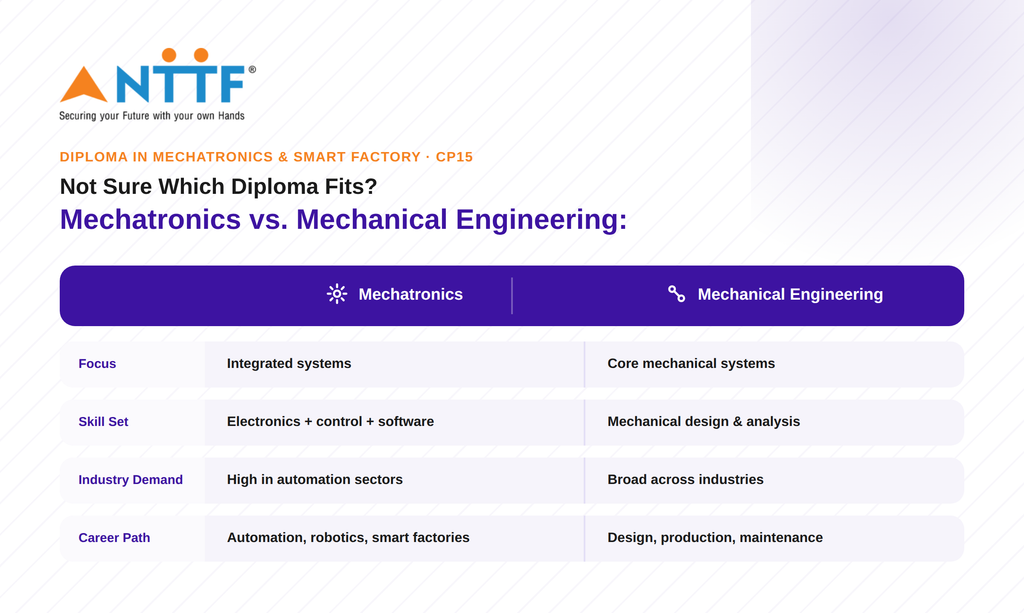
Mechatronics vs Mechanical Engineering
Career Scope of Mechatronics in Smart Factories
Industries Hiring
Several industries actively hire mechatronics professionals because their production systems depend on controlled machine performance and automation-based operations.
- Automotive Manufacturing: Automotive production depends on automated assembly and machine control at every major stage. Mechatronics engineers support this environment through system monitoring and equipment coordination. Their role becomes important because production speed and part consistency depend on machines that operate with precision.
- Electronics Production: Electronics manufacturing requires close control over machine movement and component handling. Mechatronics skills fit this requirement because engineers understand how electronic systems and mechanical parts work together inside production equipment. This makes the field relevant in factories where process accuracy affects product quality directly.
- Industrial Automation Companies: Industrial automation companies hire engineers who can work with PLCs and machine systems. They also need professionals who understand how automated equipment performs in real production settings. This creates strong opportunities for learners who complete a diploma in mechatronics smart factory and want careers linked to automation-focused engineering roles.
- Robotics Firms: Robotics firms depend on engineers who understand machine motion and control logic. Mechatronics knowledge supports this need because robotic systems operate through coordinated mechanical and electronic functions. This also gives value to students exploring a robotics engineer diploma India pathway within automation-driven industries.
Future Outlook
The future perspective is bright because smart factories rely on integrated systems that interconnect machines and production data. The automation and process control in industries increase investment in efforts to enhance output stability and machine efficiency. This makes mechatronics remain relevant in mainstream industrial sectors and supports long-term technical development for engineers who build expertise in automated manufacturing systems.
Best Diploma in Mechatronics Smart Factory: What to Look For
Choosing the right course matters because mechatronics roles demand more than basic engineering knowledge. A strong program must connect machine systems with automation logic and real production applications. This gives learners better preparation for technical roles inside smart factories and automation-led industries.
Selection Criteria
- Industry-Focused Curriculum:
The curriculum needs to reflect actual factory requirements rather than stay limited to broad academic concepts. It should cover mechanical systems and control engineering. It should also explain how these areas work together inside automated production environments. This kind of structure adds stronger value to a diploma in mechatronics smart factory because it keeps the learning closely aligned with industrial demand. - Practical Lab Exposure:
Lab exposure matters because mechatronics depends on applied understanding of machine behavior and system response. Students need regular practice with equipment and control systems so they can relate theory to industrial conditions. This strengthens technical confidence and improves readiness for roles that demand hands-on engineering judgment. - Training in Automation and Robotics:
Automation and robotics training adds direct career relevance because modern factories depend on these systems for controlled production. Students need exposure to PLCs and robotic operations. They also need to understand how automated systems support output quality and process discipline across manufacturing workflows. - Placement Support:
Placement support improves the value of a technical diploma because it connects learning with real job opportunities. Strong support from the institution helps students move toward automation and smart manufacturing roles with better direction. This becomes important for learners who want a smoother entry into industry after course completion.
Challenges Without Mechatronics Skills
Here are the key challenges without mechatronics skills:
- Limited Access to Automation-Driven Roles:
Most current manufacturing careers demand knowledge of automated machines and control systems. Candidates who lack this background usually have fewer opportunities in jobs associated with smart production environments. - Difficulty Working with Integrated Systems:
Smart factories rely on close interaction between machine components and electronic control. Engineers who fail to comprehend this relationship may not work effectively in production settings influenced by sensors and automation logic. - Slower Career Growth in Modern Manufacturing:
Career development in high-technology manufacturing is frequently based on technical specialization. Mechatronics engineers are more relevant in current factories, and general profiles tend to progress at a slower rate in comparison.
Conclusion
Mechatronics holds a strong place in smart factories because modern production depends on machines that operate through electronics and coordinated automation. Engineers who build this skill set gain stronger access to meaningful technical roles across manufacturing and robotics-driven industries. Students who want structured training in this field can explore NTTF’s Diploma in Mechatronics Engineering, a program that builds practical knowledge for careers linked to machine systems and smart manufacturing.
Further reading:
Career Pathways and Job Prospects After a Diploma in Mechatronics
What Are the Career Opportunities After Diploma in Mechatronics and Automation?