
A diploma in electrical engineering offers a practical route into industries that depend on machines and electrical maintenance. Factories need reliable electrical support. Buildings need safe electrical installation. Energy systems need trained professionals who can work with equipment, panels, and control circuits. This is why an electrical diploma continues to hold strong career value.
Students often complete a diploma in electrical engineering with one major question. What kind of career can this qualification lead to? The answer depends on technical interest and long-term goals. Some students move directly into industrial jobs. Some continue into degree programs. Some build specialized expertise and move toward the role of Power Electronics Engineer. Each path can lead to stable growth when the decision is made with clarity.
Read this blog to understand the best career options after a diploma in electrical engineering and how roles such as Power Electronics Engineer fit into the modern industry.
Why a Diploma in Electrical Engineering Creates Strong Career Value
A diploma in electrical engineering is closely connected to real industrial work. Students learn about electrical machines and basic circuits. They also study maintenance practices and control systems. This academic foundation makes them useful in workplaces where machines must run safely and where electrical faults must be handled quickly.
An electrical diploma also gives students an advantage that is often missed in general career discussions. It brings them closer to actual systems at an early stage. Early field exposure matters because technical confidence grows through real equipment and real fault conditions. Employers value this because operations depend on workers who can understand problems and respond with discipline.
This is also why the market continues to reward students with a diploma in electrical engineering. Electrical systems remain central to production units and power networks. They are also central to building services and automation setups. Career demand stays relevant because electricity remains fundamental to modern industry.
Main Career Direction After an Electrical Diploma
The first major route after an electrical diploma is direct employment. This route suits students who want practical exposure at the earliest stage. Companies recruit diploma holders for technical roles where they can learn equipment behavior and maintenance routines. This early work often shapes long-term growth because it builds reliability and technical judgment.
The second route is higher education. Many students continue after a diploma in electrical engineering through lateral entry into engineering degree programs. This route is useful for students who want stronger access to design roles and larger project responsibilities. A degree can strengthen long-term progression, though the diploma itself already creates a strong start.
The third route is specialization. Some students choose to build deeper expertise in automation or power systems. Some focus on industrial controls. Some move toward the role of Power Electronics Engineer through further technical study and relevant work experience. This route is valuable because specialization often improves career identity and long-term earning potential.
Best Career Options After a Diploma in Electrical Engineering
Here are the best career opportunities available after completing a diploma in electrical engineering:
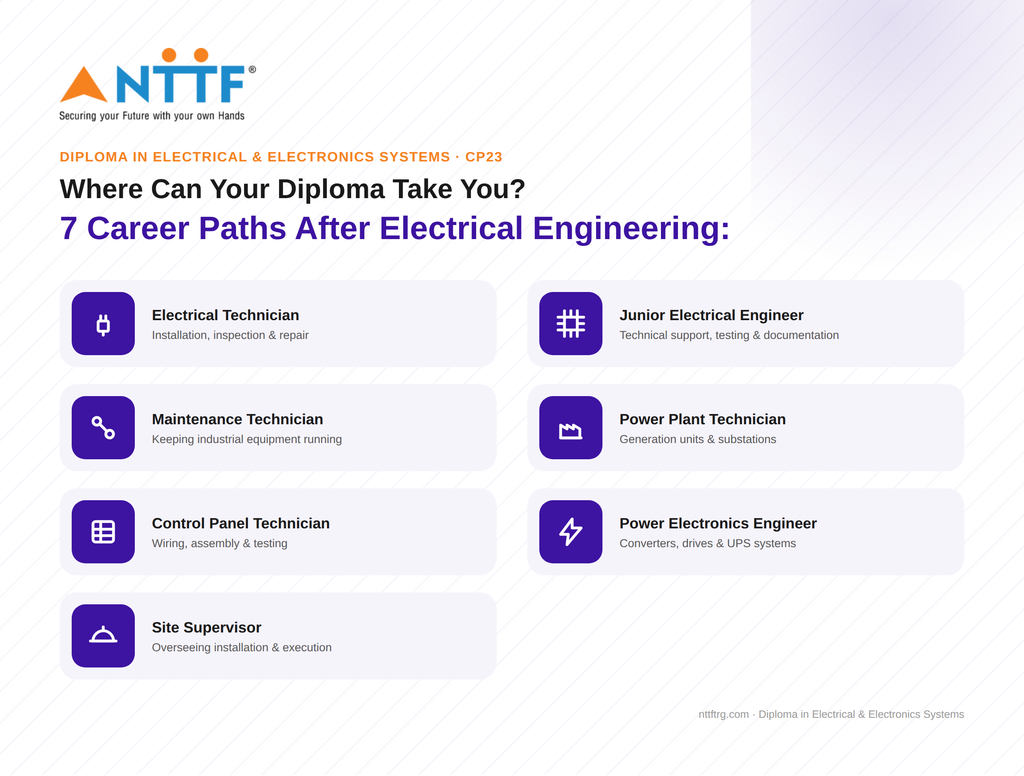
- Electrical Technician
An electrical technician is one of the most common roles after a diploma in electrical engineering. The work usually involves installation support and equipment inspection. It also involves routine repair and preventive maintenance. This role gives students exposure to motors and panels. It also gives them exposure to wiring systems and testing procedures. An electrical diploma fits this role well because the work is practical and system-focused. Students who begin here often build a strong base for later technical growth.
- Maintenance Technician
Maintenance is a strong career path because industrial equipment needs regular care. Plants cannot afford frequent downtime. This creates demand for diploma holders who can inspect machines and respond to faults. They also support service schedules and daily upkeep.
A diploma in electrical engineering is highly useful in this field because maintenance work depends on practical electrical understanding. Students who perform well in maintenance often move into senior technical roles with more responsibility.
- Control Panel Technician
Control panel work is another solid option after an electrical diploma. Panel technicians work on wiring and assembly. They also support testing and servicing. This role is important in machine manufacturing and automation-related businesses.
This path helps students who are interested in industrial systems. It also creates a bridge toward roles connected to automation support and electrical commissioning.
- Site Supervisor
Site supervision is a good path for students who prefer field execution. The work involves overseeing installation activity and checking the electrical layout execution. It also involves coordination with workers and contractors.
A diploma in electrical engineering supports this role because site work requires technical awareness and process discipline. Students who do well in site roles often build strong project exposure early in their careers.
- Junior Electrical Engineer
Some employers recruit students with an electrical diploma into junior electrical engineer roles. The title may differ from one company to another, though the work usually includes technical support and testing work. It may also include documentation and maintenance assistance.
This role can be a good start because it offers wider exposure across electrical tasks. Students should pay close attention to the quality of training in such roles because the first work environment often shapes future growth.
- Power Plant Technician
The energy and utility sectors continue to create opportunities after a diploma in electrical engineering. Power plant technicians support operations and maintenance. They may also work with equipment linked to generation units and substations.
This path suits students who want to work in energy systems. It also creates a stable route toward long-term technical roles in utility-related environments.
- Power Electronics Engineer
The role of Power Electronics Engineer has gained strong relevance because many modern systems rely on controlled power conversion. Inverters play an important role in this space. Converters also play an important role. Drives and UPS systems further increase the importance of this field.
A student with a diploma in electrical engineering can move toward the role of Power Electronics Engineer, though this usually requires additional technical depth. Entry often begins through testing work or service roles. It may also begin through technical support in companies that handle power control systems.
Students who want to become Power Electronics Engineers should build a stronger understanding of converter circuits and switching devices. They should also study motor drives and application-focused power systems. This path is especially relevant in solar energy and EV infrastructure. It is also relevant in industrial power control.
Industries That Hire Diploma Holders in Electrical Engineering
Manufacturing is one of the strongest sectors for students with a diploma in electrical engineering. Factories need support for machine uptime and maintenance routines. This keeps demand steady for technically trained diploma holders.
Construction and building services also recruit students with an electrical diploma. Electrical systems are central to commercial spaces and infrastructure projects. This creates roles in installation and inspection. It also creates roles in site coordination and maintenance support.
Energy is another major sector. Utility systems and power facilities continue to need trained electrical staff. Renewable energy has also expanded the scope of an electrical diploma. Solar installations depend on electrical knowledge. Battery-linked systems depend on it as well. This broad industry presence gives students flexibility in career planning.
Higher Study Options After Electrical Diploma
Higher studies remain a strong option after a diploma in electrical engineering. Lateral entry into B.E. or B. Tech programs are one of the most common routes. This helps students gain stronger theoretical depth and broader access to engineering roles.
An electrical diploma already builds practical understanding. A degree can build on that and open stronger access to design-related roles and project-based responsibilities. Students who want a career in advanced system design often benefit from this route.
This decision should be made with strategy. Some students may prefer to gain work experience first and study later. Some may continue immediately because their target roles require a degree. The better choice depends on financial priorities and long-term professional goals.
Here are the Skills You Will Develop After a Diploma in Electrical Engineering
- Electrical Circuit Analysis: Proficiency to read circuit diagrams and understand how electrical components function within a system. This skill helps in identifying faults and maintaining electrical equipment.
- Electrical Machine Operation: Knowledge of motors and generators. Students learn how these machines operate and how they are maintained in industrial environments.
- Industrial Electrical Maintenance: Skills required to inspect electrical systems and handle repair work. Maintenance knowledge supports machine uptime in manufacturing and plant operations.
- Control Panel Wiring and Testing: Understanding of electrical panels and wiring systems used in industrial machines. This skill also includes testing circuits and verifying electrical connections.
- Power System Fundamentals: Basic knowledge of how electricity is generated and distributed. This helps in understanding substations and electrical infrastructure used in energy systems.
- Electrical Safety Practices: Training in safe handling of electrical equipment and systems. This skill is critical for preventing accidents and maintaining workplace safety.
- Basic Automation and PLC Concepts: Introduction to industrial automation systems and programmable logic controllers. This knowledge supports work in automated production environments.
- Technical Troubleshooting: Ability to diagnose electrical faults and resolve system issues. Troubleshooting skills are essential in maintenance and service roles.
- Electrical Drawing Interpretation: Understanding of electrical schematics and engineering drawings used in installations and industrial systems.
How to Choose the Right Career Path?
Career choice after an electrical diploma should be based on the kind of technical environment a student wants to work in. Students who prefer plant operations may do well in maintenance. Students who are interested in project execution often perform well in site-based electrical roles. Students who prefer advanced electrical applications may gradually move toward the role of Power Electronics Engineer.
The first job matters because it creates the base for the next one. A role with strong technical exposure often creates more value than a role with a better title and weak learning. Students should therefore look at the quality of work and the kind of systems they will handle.
Conclusion
A diploma in electrical engineering creates several strong career options across the industry. Students can enter maintenance and plant support. They can also move into site execution and energy-related work. An electrical diploma also creates a path toward technical specialization, especially for students who want to become a Power Electronics Engineer. Career growth becomes stronger when the first role is chosen carefully and when skill development continues with discipline.
Build a strong technical career with the Diploma in ELECTRONICS AND EMBEDDED SYSTEMS: CP04 at NTTF. Gain practical training and industry-ready skills that prepare you for roles across power systems, manufacturing, and automation. Apply now and take the first step toward a future in electrical engineering.